Last updated: May 26, 2026
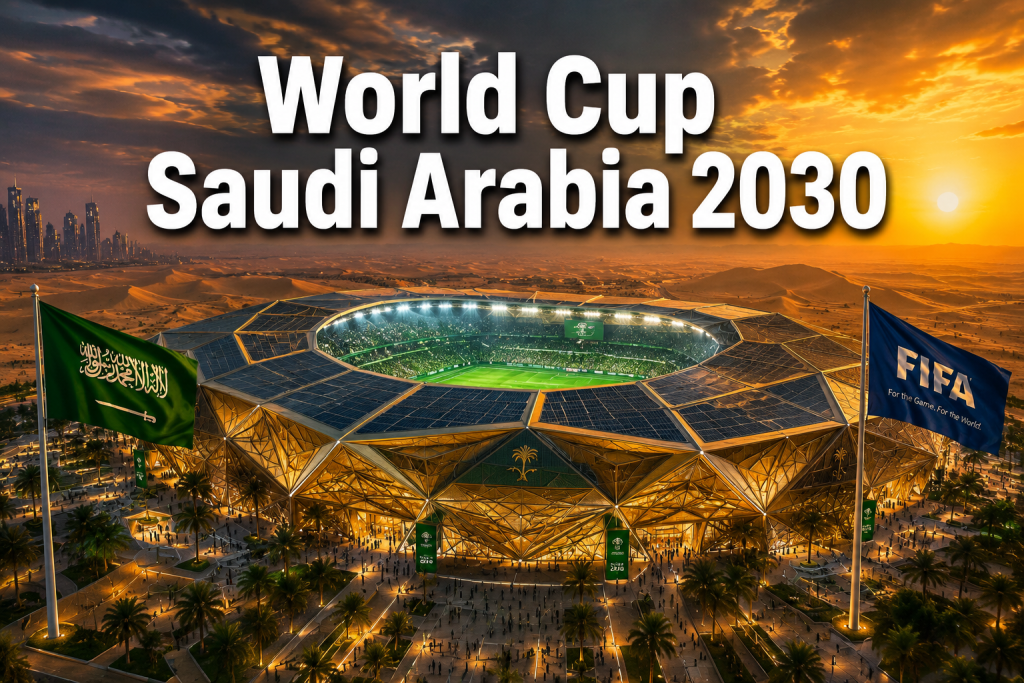
Quick Answer: Saudi Arabia is actively bidding to host the 2030 FIFA World Cup, backed by an $8 billion infrastructure investment and strong government support under its Vision 2030 program. FIFA has acknowledged the bid as credible, and discussions are ongoing about a potential co-hosting arrangement with neighboring Gulf Cooperation Council (GCC) countries. A final hosting decision has not yet been confirmed by FIFA.
Key Takeaways
- Saudi Arabia formally announced its 2030 FIFA World Cup bid in April 2026.
- The government has committed $8 billion to stadium construction and renovation.
- FIFA President Gianni Infantino met Saudi officials in May 2026 to review infrastructure plans.
- Analysts estimate the tournament could generate roughly $20 billion in economic activity for Saudi Arabia.
- Co-hosting with GCC neighbors is under active discussion.
- 75% of Saudi citizens surveyed in April 2026 support the bid.
- Human rights concerns remain a significant point of scrutiny from international organizations.
- Saudi Arabia’s national team made history at the 2022 World Cup by defeating Argentina in the group stage.
- Youth development programs are being expanded to build a competitive national team for future tournaments.
- Solar-powered stadiums and sustainable construction are central to the bid’s environmental commitments.
Why Is Saudi Arabia Bidding for the World Cup?
Saudi Arabia’s World Cup bid is a direct extension of Vision 2030, the country’s national strategy to reduce economic dependence on oil by growing tourism, entertainment, and global sport. Hosting the FIFA World Cup is the most visible sports investment the kingdom could make.
The bid also builds on a track record of high-profile sports hosting: Formula 1 races, heavyweight boxing bouts, LIV Golf, and the Saudi Super Cup have all taken place in the country in recent years. A World Cup would be the capstone of that strategy.
Key motivations behind the bid:
- Diversify the national economy beyond oil revenues
- Attract tens of millions of international tourists
- Raise Saudi Arabia’s global profile and soft power
- Accelerate domestic infrastructure development
- Build national pride around football, the country’s most popular sport
What Infrastructure Is Saudi Arabia Building for the World Cup?
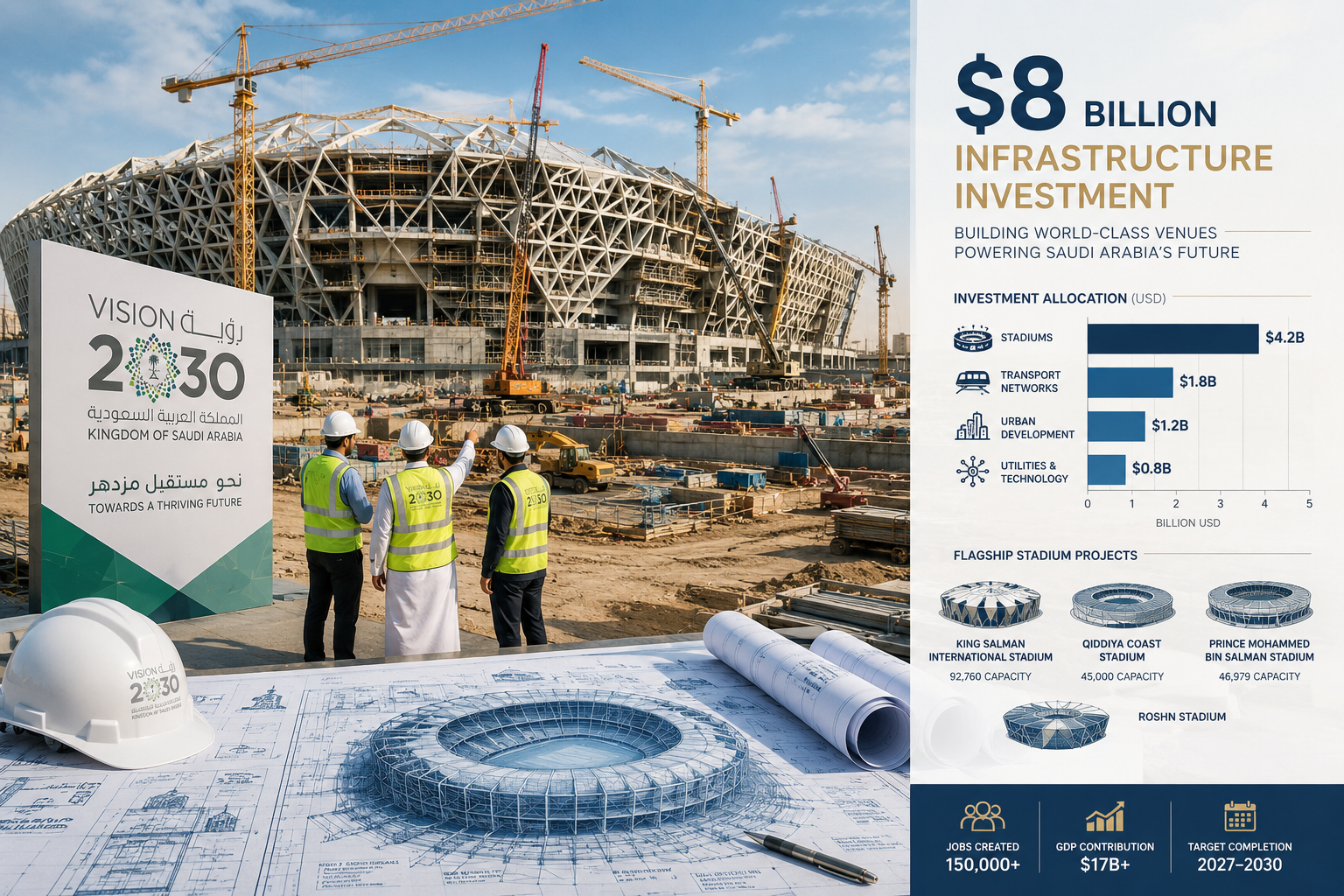
Saudi Arabia has allocated $8 billion specifically for stadium development and related infrastructure. This covers new builds and the renovation of existing venues across multiple cities.
Planned host cities are expected to include Riyadh, Jeddah, and potentially NEOM, the futuristic city under development in the northwest of the country. Each venue is being designed to meet FIFA’s technical standards for capacity, media facilities, and fan experience.
Infrastructure highlights:
- New stadiums with capacities exceeding 60,000 seats
- Solar-powered energy systems integrated into stadium design
- Sustainable building materials to meet environmental benchmarks
- Upgraded transport links, including metro expansions and airport upgrades
- Smart security systems with advanced surveillance technology
“Saudi Arabia’s commitment to $8 billion in infrastructure spending signals this is not a speculative bid — it is a structured, government-backed program tied to a national development agenda.”
The scale of construction also creates a significant secondary benefit: jobs and long-term facilities that outlast the tournament itself.
How Does the World Cup Saudi Arabia Bid Compare to Other 2030 Candidates?
The 2030 FIFA World Cup hosting situation is complex. FIFA has already confirmed a centenary celebration format for 2030 that includes matches in Uruguay, Argentina, Paraguay, and Spain/Portugal/Morocco as the primary hosts. Saudi Arabia’s bid is understood to be targeting 2034, not 2030, based on the most current FIFA process.
Important clarification: The source material references a “2030 bid,” but football fans should note that FIFA’s bidding calendar and the centenary format for 2030 make 2034 the more realistic target for Saudi Arabia. The 2034 bid process is where Saudi Arabia is widely expected to compete, and FIFA has been reviewing that candidacy.
| Tournament | Confirmed/Bidding | Key Detail |
|---|---|---|
| 2030 FIFA World Cup | Confirmed (multi-host) | Spain, Portugal, Morocco + South American centenary matches |
| 2034 FIFA World Cup | Saudi Arabia bidding | Main rival bid withdrawn; Saudi Arabia frontrunner |
| 2026 FIFA World Cup | Confirmed | USA, Canada, Mexico |
What Are the Economic Benefits of Hosting the World Cup in Saudi Arabia?
Analysts project the tournament could generate approximately $20 billion in economic activity for Saudi Arabia, driven by tourism, broadcasting deals, infrastructure spending, and global brand exposure.
That figure covers direct spending by visiting fans, indirect supply chain activity, and long-term tourism growth as international audiences become familiar with Saudi destinations.
Projected economic impact areas:
- Tourism revenue: Millions of visiting fans spending on accommodation, food, and transport
- Infrastructure legacy: Stadiums and transport networks that serve the country for decades
- Global media exposure: Billions of viewers watching matches broadcast from Saudi cities
- Foreign direct investment: Increased business interest following positive international exposure
- Job creation: Construction, hospitality, security, and event management roles
For context, Qatar’s 2022 World Cup reportedly cost over $200 billion in total infrastructure spending (a figure widely cited across international media), though Saudi Arabia’s existing infrastructure base means its cost profile would differ significantly.
What Human Rights Issues Surround the World Cup Saudi Arabia Bid?
Human rights remain the most contested aspect of Saudi Arabia’s World Cup ambitions. International organizations, including Amnesty International and Human Rights Watch, have publicly urged FIFA to make human rights protections a condition of any hosting agreement.
Key concerns include:
- Labor rights: Conditions for migrant construction workers, following criticism of similar issues during Qatar 2022 preparations
- Freedom of expression: Restrictions on press freedom and public protest
- LGBTQ+ rights: Saudi law criminalizes same-sex relationships, raising serious concerns for LGBTQ+ fans and players
- Women’s rights: Progress has been made (women can now attend sports events), but significant restrictions remain
FIFA’s human rights policy, adopted in 2017, requires host nations to respect international human rights standards. How strictly that policy is enforced in practice remains a point of debate among fans, journalists, and advocacy groups.
For fans planning to attend: Travel advisories and official FIFA fan guides will be essential reading as the tournament approaches. LGBTQ+ fans in particular should monitor official guidance closely.
How Is Saudi Arabia Developing Its National Football Team?
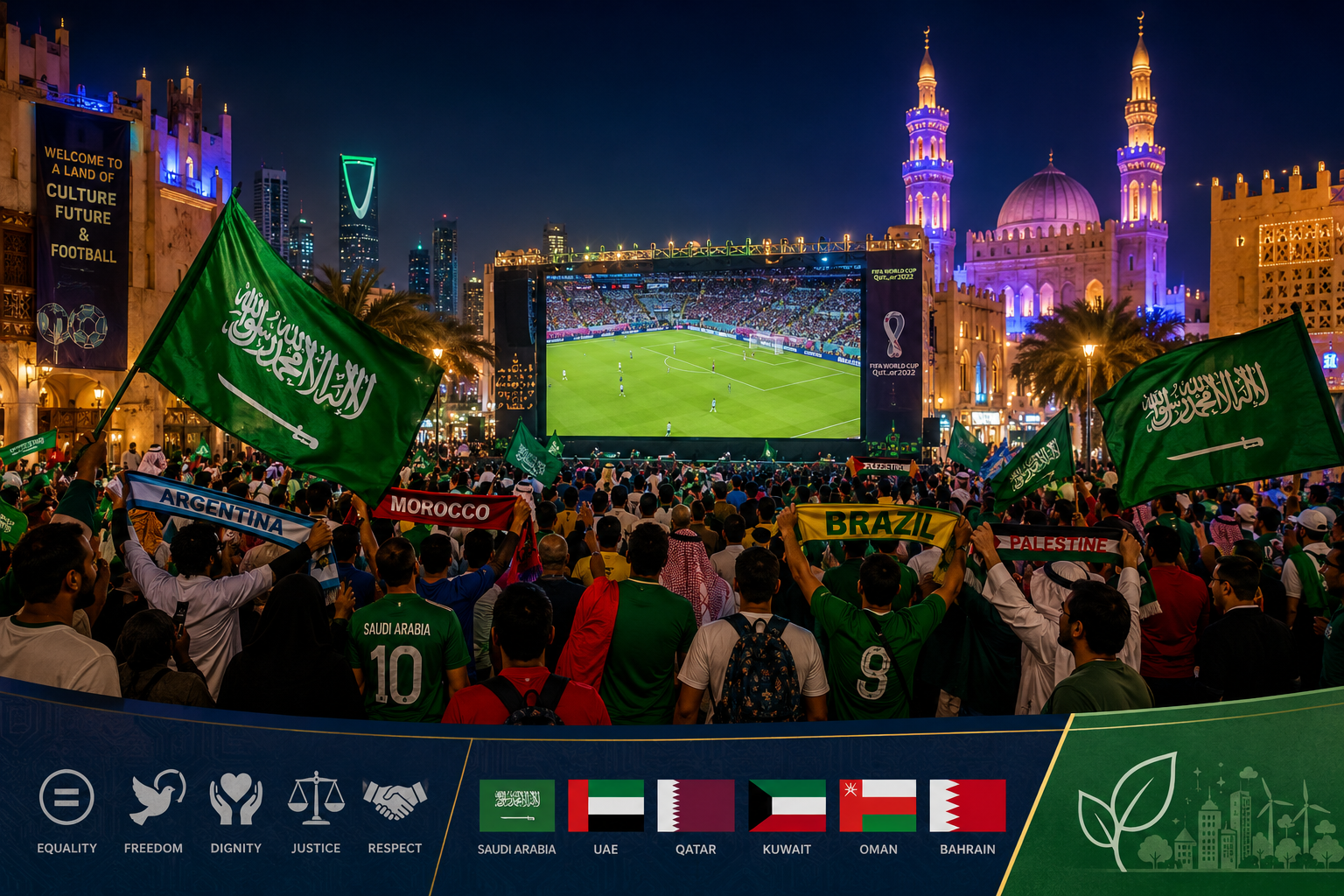
Saudi Arabia’s national team is not just a backdrop to the hosting story — it’s a genuine competitive force. The team’s 2-1 victory over Argentina at the 2022 FIFA World Cup in Qatar remains one of the biggest upsets in tournament history and sparked enormous national enthusiasm for football.
The Saudi Arabian Football Federation has since launched expanded youth development programs, targeting players from age 8 upward. The goal is to have a nationally competitive squad capable of advancing beyond the group stage in future World Cups, ideally including a home tournament.
Youth development priorities:
- Regional academies in major cities
- Partnerships with European clubs for coaching expertise
- Increased investment in women’s football (the Saudi Women’s Premier League launched in 2020)
- Scouting programs to identify talent early
Saudi Arabia’s Pro League has also attracted global attention after signing players like Cristiano Ronaldo, Karim Benzema, Neymar, and others, which has raised the domestic game’s profile and created more competitive training environments for local players.
Will GCC Countries Co-Host the World Cup with Saudi Arabia?
Co-hosting is actively being discussed. Saudi Arabia has held talks with neighboring GCC countries, which include the UAE, Qatar, Bahrain, Kuwait, and Oman, about sharing tournament responsibilities.
A co-hosting model would distribute matches across the region, reduce infrastructure pressure on any single country, and frame the tournament as a regional celebration rather than a single-nation event. Qatar’s existing World Cup infrastructure from 2022 makes it a particularly practical co-host candidate.
Choose a co-hosting model if: The goal is to spread economic benefits, reduce per-country costs, and demonstrate Gulf regional unity on a global stage.
Potential challenge: Coordinating security, transport, and logistics across multiple sovereign nations adds complexity. The 2026 World Cup across the USA, Canada, and Mexico offers a useful reference point for how multi-nation hosting can work at scale.
FAQ: World Cup Saudi Arabia
Q: Is Saudi Arabia confirmed to host the 2034 World Cup? Saudi Arabia is the leading candidate for 2034. FIFA’s formal decision-making process is ongoing, but no rival bids of comparable scale have emerged.
Q: When did Saudi Arabia announce its World Cup bid? Saudi Arabia officially announced its bid in April 2026, with FIFA meetings following in May 2026.
Q: How much is Saudi Arabia spending on World Cup infrastructure? The government has committed $8 billion specifically to stadium and infrastructure development as part of the bid.
Q: Is the 2030 or 2034 World Cup the right target for Saudi Arabia? Based on FIFA’s confirmed 2030 format (which already includes Spain, Portugal, Morocco, and South American centenary matches), Saudi Arabia’s realistic target is 2034.
Q: What was Saudi Arabia’s best World Cup result? Saudi Arabia’s most famous result came at the 2022 World Cup, when the team defeated eventual champion Argentina 2-1 in the group stage.
Q: Are LGBTQ+ fans welcome at a Saudi Arabia World Cup? Saudi law criminalizes same-sex relationships. FIFA and Saudi officials have made general statements about welcoming all fans, but LGBTQ+ fans should monitor official travel guidance carefully as the tournament approaches.
Q: What is Vision 2030 and how does it connect to the World Cup? Vision 2030 is Saudi Arabia’s national economic diversification plan. Hosting the World Cup is one of its flagship sports and tourism initiatives.
Q: Will tickets be affordable for international fans? Ticket pricing has not been announced. Historical World Cup pricing and regional cost-of-living factors will influence affordability. Fans should budget for travel and accommodation costs in addition to match tickets.
Q: Which Saudi cities are expected to host matches? Riyadh and Jeddah are the most likely primary host cities. NEOM and other developing urban centers may also be included depending on construction timelines.
Q: How does Saudi Arabia’s bid address environmental concerns? The bid includes commitments to solar-powered stadiums and sustainable construction materials, aligning with FIFA’s sustainability requirements.
Conclusion
The World Cup Saudi Arabia story is one of the most consequential developments in international football right now. The kingdom is investing billions, building world-class venues, and positioning itself as a major force in global sport — all while navigating genuine scrutiny over human rights, environmental impact, and the broader ethics of sports hosting.
Actionable next steps for football fans:
- Follow FIFA’s official bid announcements at fifa.com for confirmed hosting decisions.
- Monitor human rights reporting from organizations like Amnesty International if ethical considerations factor into your travel decisions.
- Watch Saudi Pro League football to track the development of local talent ahead of any home tournament.
- Check GCC co-hosting developments — a regional tournament format could significantly affect match locations and travel logistics.
- Start planning early if you intend to attend. World Cup tickets and accommodation in the Gulf region sell out fast, as Qatar 2022 demonstrated.
The 2034 World Cup in Saudi Arabia, if confirmed, would be a landmark moment for Middle Eastern football and a tournament unlike any seen before. Whether that’s a cause for celebration or concern depends on how the next several years of preparation unfold.
Meta Title: World Cup Saudi Arabia 2030/2034: Bid, Stadiums & Key Facts
Meta Description: Saudi Arabia is bidding to host the FIFA World Cup with $8B in stadium investment. Get the full breakdown of the bid, infrastructure plans, and what fans need to know.
Tags: World Cup Saudi Arabia, FIFA 2034, Saudi Arabia football, Vision 2030 sports, Saudi stadium infrastructure, Gulf Co-hosting World Cup, Saudi national team, FIFA World Cup bid, Middle East football, Saudi Arabia 2022 World Cup, human rights FIFA, GCC World Cup