Last updated: May 25, 2026
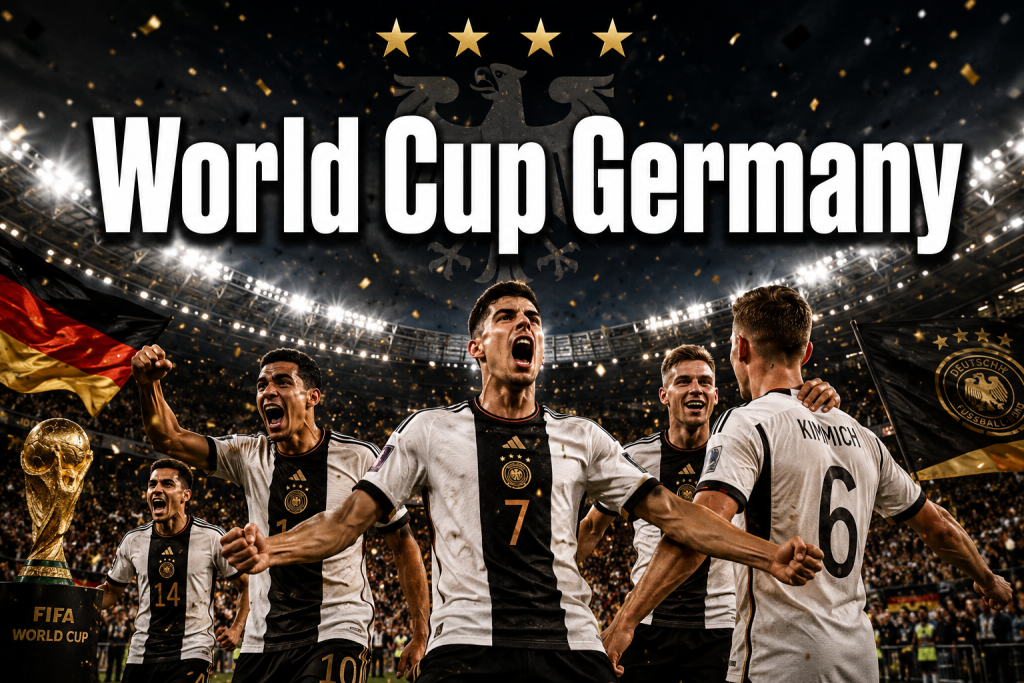
Quick Answer: Germany is one of the most decorated nations in World Cup history, with four FIFA World Cup titles (1954, 1974, 1990, 2014). Heading into the 2026 World Cup hosted across the USA, Canada, and Mexico, Die Mannschaft arrives with a rebuilt squad under Julian Nagelsmann, featuring captain Joshua Kimmich, the returning Manuel Neuer, and a new generation of attackers led by Jamal Musiala and Florian Wirtz. [2]
Key Takeaways
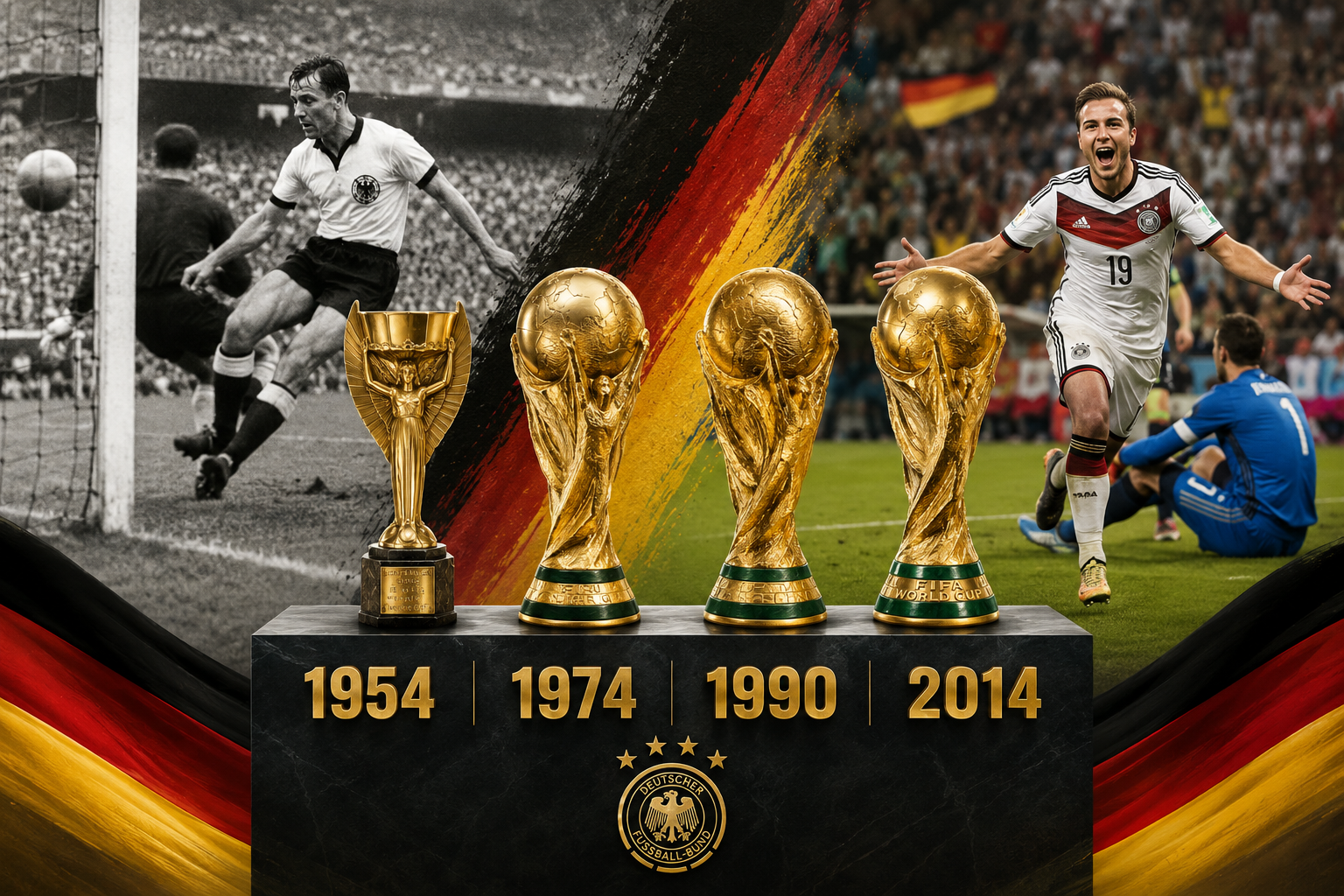
- 🏆 Germany has won the FIFA World Cup four times: 1954, 1974, 1990, and 2014.
- Germany’s most recent World Cup title was in Brazil in 2014, sealed by Mario Götze’s extra-time goal against Argentina.
- For 2026, Julian Nagelsmann named a 26-man squad with Joshua Kimmich as captain and Manuel Neuer returning from international retirement. [2]
- Jamal Musiala, Florian Wirtz, and Kai Havertz are the attacking cornerstones of the current squad.
- Germany’s youth development system, anchored by the DFB academies, is widely regarded as one of the best in world football.
- Germany’s qualifying path to 2026 was bumpy — a shock loss to Slovakia in September 2025 raised early concerns. [4]
- Ticket prices for World Cup matches vary widely, with group stage games starting around $50–$200 USD (estimated) depending on category and opponent.
- Germany compares favorably to Brazil (5 titles) and Italy (4 titles) in all-time World Cup success.
- Notable omissions from the 2026 squad include Niclas Füllkrug, Robert Andrich, and Yann Aurel Bisseck. [2]
- German football’s strength comes from a mix of elite youth academies, tactical discipline, and Bundesliga infrastructure.
How Many World Cup Titles Does Germany Have?
Germany has won the FIFA World Cup four times, making Die Mannschaft one of only three nations to win it more than three times. Those four titles place Germany level with Italy and behind only Brazil (5 titles).
Here’s a quick breakdown:
| Year | Host Country | Final Opponent | Score |
|---|---|---|---|
| 1954 | Switzerland | Hungary | 3–2 |
| 1974 | West Germany | Netherlands | 2–1 |
| 1990 | Italy | Argentina | 1–0 |
| 2014 | Brazil | Argentina | 1–0 (AET) |
“No country in Europe has reached more World Cup finals than Germany.”
West Germany also finished as runners-up in 1966, 1982, and 1986, showing a consistency at major tournaments that very few nations can match.
What Years Did Germany Win the World Cup?
Germany’s four World Cup wins span six decades: 1954, 1974, 1990, and 2014. Each title came in a different era with a different style of play.
- 1954 (“The Miracle of Bern”): West Germany beat heavily favored Hungary 3–2 in what remains one of the biggest upsets in tournament history.
- 1974: On home soil, West Germany defeated Johan Cruyff’s Netherlands in a memorable final.
- 1990: A single Andreas Brehme penalty beat Argentina in Rome.
- 2014: Mario Götze’s stunning volley in extra time ended Argentina’s challenge in Rio de Janeiro.
When Did Germany Last Win the World Cup?
Germany last won the World Cup in 2014, defeating Argentina 1–0 in the final at the Maracanã in Rio de Janeiro. Mario Götze, who came on as a substitute, scored the only goal in extra time. That tournament also featured Germany’s historic 7–1 semi-final demolition of host nation Brazil, widely considered one of the most shocking results in World Cup history.
Since 2014, Germany has struggled at major tournaments — crashing out in the group stage at the 2018 World Cup in Russia and falling in the round of 16 at the 2022 World Cup in Qatar.
How Does Germany’s World Cup Performance Compare to Brazil or Italy?
Germany sits firmly among the sport’s elite, but Brazil still leads the all-time rankings.
| Nation | World Cup Wins | Finals Reached | Semi-Finals+ |
|---|---|---|---|
| Brazil | 5 | 7 | 11 |
| Germany | 4 | 8 | 13 |
| Italy | 4 | 6 | 8 |
| Argentina | 3 | 6 | 7 |
| France | 2 | 3 | 6 |
Germany actually leads all nations in total World Cup final appearances (8), which speaks to a remarkable ability to reach the business end of tournaments even when not at peak form.
Why Is Germany So Good at Soccer?
Germany’s sustained success comes down to three core pillars: youth development, tactical structure, and professional infrastructure.
After a poor run of results in the late 1990s and early 2000s, the German Football Association (DFB) launched a nationwide reform of youth football in 2000. Every Bundesliga club was required to build a certified youth academy. That investment produced the generation that won the 2014 World Cup — players like Thomas Müller, Mesut Özil, and Toni Kroos all came through those reformed systems.
Key reasons Germany consistently produces world-class players:
- Mandatory club academies: All Bundesliga and 2. Bundesliga clubs must operate DFB-certified youth academies.
- Early technical training: German youth programs emphasize ball control, positional awareness, and pressing from an early age.
- High volume of competitive minutes: Young players get regular game time in reserve leagues before stepping up.
- Physical conditioning: German football has long prioritized athleticism alongside technical skill.
How Do Youth Soccer Programs in Germany Develop World Cup Talent?
Germany’s youth system is built around the DFB’s network of regional talent centers (Stützpunkte), which identify and coach promising players from age 11 onward. These centers feed into club academies, which then supply the national youth teams (U15 through U21).
What makes German youth development different:
- Players are coached on positional play and pressing triggers from early teens.
- The DFB runs national youth team tournaments that double as scouting events.
- Clubs like Bayern Munich, Borussia Dortmund, and RB Leipzig invest heavily in under-23 teams that compete in professional leagues, giving youngsters real competitive experience.
Jamal Musiala, for example, joined Bayern Munich’s academy as a teenager and was playing in the Bundesliga by age 17. Florian Wirtz followed a similar path through Bayer Leverkusen’s system. [2]
What Makes the German Soccer Team’s Strategy Unique?
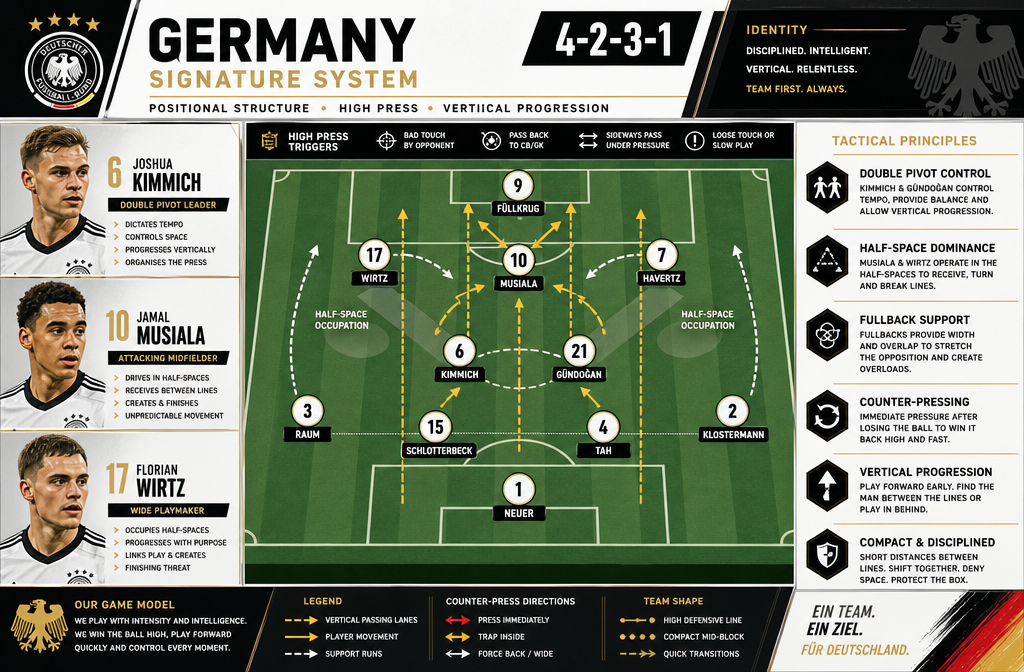
Germany’s tactical identity under Julian Nagelsmann centers on a flexible 4-2-3-1 or 4-3-3 system that prioritizes vertical passing, high pressing, and quick transitions.
Signature tactical traits:
- Gegenpressing: Immediate pressure on the ball after losing possession, popularized in Germany by Jürgen Klopp.
- Positional flexibility: Players like Kimmich can operate as a defensive midfielder or right back depending on the game state.
- Wide overloads: Using wide forwards to create numerical advantages on the flanks.
- Set-piece organization: Germany consistently ranks among the top nations for set-piece goals.
Choose a high-press system if your squad has athletic, technically sound midfielders — exactly what Germany has with Kimmich, Musiala, and Wirtz.
Who Are the Top German Soccer Players in Recent World Cups?
For the 2026 World Cup, Germany’s squad is built around a mix of experienced leaders and young attackers. [2]
Key players to watch:
- Joshua Kimmich (Captain, Bayern Munich): The heartbeat of Germany’s midfield. His reading of the game and passing range are elite.
- Jamal Musiala (Bayern Munich): Arguably Germany’s most exciting player. Dribbling, creativity, and composure beyond his years.
- Florian Wirtz (Liverpool): A dynamic attacking midfielder who can unlock defenses with a single pass or run.
- Kai Havertz (Arsenal): Versatile forward who can play as a striker or in behind. Champions League winner.
- Antonio Rüdiger (Real Madrid): Commanding center-back and vocal leader in defense.
- Manuel Neuer (Bayern Munich): Legendary goalkeeper who reversed his international retirement to feature at 2026. [2]
Is Germany Guaranteed to Qualify for the Next World Cup?
No team is ever guaranteed World Cup qualification, and Germany’s recent qualifying campaign showed exactly that. Germany suffered a shock 1–0 loss to Slovakia in September 2025, their third consecutive defeat in a difficult qualifying stretch. [4] That result rattled confidence and sparked debate about squad selection and tactical approach.
Germany did ultimately secure their place in the 2026 tournament, but the rocky qualifying road was a reminder that no nation — not even a four-time champion — can take qualification for granted. [3]
Common Mistakes German Soccer Teams Make in Tournaments
Germany’s tournament history isn’t without failure. A few patterns have emerged:
- Slow starts: Germany often takes time to find form, which cost them dearly in 2018 when early losses proved fatal.
- Over-reliance on aging stars: The 2018 squad leaned heavily on veterans past their peak. The 2026 squad has deliberately shifted younger.
- Defensive vulnerability on transitions: High defensive lines can be exposed by pace, as seen in the 2022 tournament.
- Selection controversies: Omitting in-form players (like Niclas Füllkrug for 2026) in favor of tactical fits can backfire if those tactical systems don’t click. [2]
What Are the Typical Salaries for German National Team Players?
German national team players are paid match fees and bonuses by the DFB rather than a fixed salary (club salaries are separate). For major tournaments, the DFB has historically offered significant bonus pools shared among the squad.
At club level, Germany’s top stars earn substantial wages. As an estimate based on publicly reported figures:
- Top earners (Musiala, Wirtz, Havertz, Rüdiger): Estimated €10–20 million per year at club level.
- Mid-tier squad players: Estimated €3–8 million annually.
- National team bonuses: The DFB paid a reported €400,000 per player for winning the 2014 World Cup (widely cited at the time, though exact current figures are not publicly confirmed for 2026).
These are estimates. Exact DFB bonus structures for 2026 have not been officially published.
How Much Does It Cost to Attend a World Cup Germany Match in 2026?
Attending a 2026 World Cup match isn’t cheap, but it’s more accessible than many fans assume. FIFA sets ticket prices across several categories.
Estimated ticket price ranges (USD, based on FIFA’s general 2026 pricing tiers):
- Category 4 (local residents): $50–$100
- Category 1 (general public, group stage): $100–$200
- Category 2/3 (premium views): $200–$500+
- Knockout rounds: Prices increase significantly, with semi-finals and finals potentially exceeding $1,000+ on secondary markets.
Germany’s group stage matches are scheduled across multiple U.S. cities. [7] Factor in travel, accommodation, and food when budgeting — a full matchday experience in a U.S. host city could run $500–$1,500+ per person depending on location.
Which German Players Might Not Be the Right Fit for the National Team?
Nagelsmann made some bold omissions for 2026. Players like Robert Andrich, Niclas Füllkrug, Yann Aurel Bisseck, and Jonathan Burkardt were all left out of the final 26-man squad. [2]
The reasoning varies:
- Füllkrug was overlooked in favor of Tim Kleindienst, suggesting Nagelsmann prefers a more mobile striker who fits the high-press system.
- Andrich missed out despite strong Bundesliga form, possibly due to tactical fit in midfield where Kimmich and others are prioritized.
- Bisseck was omitted despite playing regularly at Inter Milan, suggesting the defensive unit is largely settled around Rüdiger, Schlotterbeck, and Tah.
The lesson: being in form at club level doesn’t guarantee a national team spot if the tactical system doesn’t suit your profile.
Conclusion
Germany’s World Cup story is one of the richest in football history — four titles, eight finals, and a tradition of producing world-class talent through one of the sport’s best development systems. The 2026 World Cup represents a genuine opportunity for Die Mannschaft to end a 12-year title drought, with a squad that blends experienced leaders like Kimmich and Neuer with explosive young talent in Musiala and Wirtz.
Actionable next steps for fans:
- Check Germany’s 2026 match schedule and host cities to plan travel or viewing parties. [7]
- Monitor squad news — Neuer’s fitness and Musiala’s form will be key storylines heading into the tournament. [2]
- Watch Bundesliga matches to track the form of key squad members before the tournament kicks off.
- Secure tickets early through FIFA’s official channels if attending in person — demand for Germany matches is always high.
- Follow the DFB’s official channels for squad updates, press conferences, and tactical previews.
Germany’s best football is always worth watching. In 2026, the world will be watching closely.
FAQ
Q: How many times has Germany won the World Cup? Germany has won the FIFA World Cup four times: in 1954, 1974, 1990, and 2014.
Q: When did Germany last win the World Cup? Germany last won the World Cup in 2014, beating Argentina 1–0 in the final in Brazil thanks to Mario Götze’s extra-time goal.
Q: Who is the captain of Germany’s 2026 World Cup squad? Joshua Kimmich of Bayern Munich is the captain of Germany’s 2026 World Cup squad, as confirmed by the DFB. [2]
Q: Is Manuel Neuer playing in the 2026 World Cup? Yes. Manuel Neuer reversed his international retirement and was named in Germany’s official 26-man squad for the 2026 World Cup. [2]
Q: Who are Germany’s best players at the 2026 World Cup? Germany’s standout players for 2026 include Jamal Musiala, Florian Wirtz, Joshua Kimmich, Kai Havertz, and Antonio Rüdiger. [2]
Q: Did Germany qualify for the 2026 World Cup? Yes, Germany qualified for the 2026 World Cup, though their qualifying campaign included a surprise loss to Slovakia in September 2025. [3][4]
Q: Why did Germany lose to Slovakia in qualifying? Germany suffered a shock defeat to Slovakia in September 2025 as part of a difficult run of three consecutive losses. The result raised questions about squad selection and tactical consistency. [4]
Q: Who was left out of Germany’s 2026 World Cup squad? Notable omissions include Niclas Füllkrug, Robert Andrich, Yann Aurel Bisseck, Jonathan Burkardt, and Maxim Mittelstädt. [2]
Q: How does Germany compare to Brazil in World Cup history? Brazil leads with 5 titles; Germany has 4. However, Germany has appeared in more World Cup finals (8) than any other nation.
Q: How much does it cost to watch Germany play at the 2026 World Cup? General admission tickets start around $100–$200 USD for group stage matches, with prices rising sharply for knockout rounds and premium categories.
Q: What tactical system does Germany use at the World Cup? Under Julian Nagelsmann, Germany typically uses a 4-2-3-1 or 4-3-3 system built around gegenpressing, vertical passing, and positional flexibility.
Q: How does Germany develop young soccer talent? Germany’s DFB runs a nationwide network of talent centers and mandates all Bundesliga clubs to operate certified youth academies, creating a pipeline from grassroots to the national team.
References
[1] Germany Leaked 2026 Fifa World 093500828 – https://sports.yahoo.com/articles/germany-leaked-2026-fifa-world-093500828.html
[2] Germany Squad World Cup 2026 Manuel Neuer Nagelsmann 37487 – https://www.bundesliga.com/en/bundesliga/news/germany-squad-world-cup-2026-manuel-neuer-nagelsmann-37487
[3] Germany 2026 World Cup Qualifying – https://www.espn.com/soccer/story/_/id/46543110/germany-2026-world-cup-qualifying
[4] Germany Shocked By Slovakia With Third Loss In Row As World Cup Path Begins – https://www.aljazeera.com/sports/2025/9/4/germany-shocked-by-slovakia-with-third-loss-in-row-as-world-cup-path-begins
[7] Germany World Cup 2026 Schedule Locations Dates Times – https://www.foxsports.com/stories/soccer/germany-world-cup-2026-schedule-locations-dates-times
[8] Germany 50 Days To Go World Cup – https://www.nytimes.com/athletic/7214865/2026/04/22/germany-50-days-to-go-world-cup/