Last updated: May 25, 2026
Quick Answer: Australia has hosted major FIFA World Cup events, most notably the FIFA Women’s World Cup 2023 (co-hosted with New Zealand), and is confirmed to co-host the FIFA Men’s World Cup 2034 alongside Saudi Arabia. Tickets, venues, and travel logistics vary significantly between tournaments, so planning early is the smartest move for any football fan.
Key Takeaways 🏆
- Australia co-hosted the FIFA Women’s World Cup 2023 with New Zealand, and the Matildas reached the semi-finals.
- Australia is confirmed as a co-host of the 2034 FIFA Men’s World Cup alongside Saudi Arabia.
- Major venues include stadiums in Sydney, Melbourne, Brisbane, Adelaide, and Perth.
- World Cup tickets in Australia typically range from roughly AUD $50 to $500+ depending on the match and category.
- The Matildas (women’s team) have historically outperformed the Socceroos (men’s team) on the world stage in recent years.
- International fans can purchase tickets through the official FIFA ticketing platform, but demand is extremely high.
- Australia’s World Cup cities offer strong tourism infrastructure, but accommodation books out fast during tournament periods.
- Accessibility options for fans with disabilities have improved significantly at Australian stadiums.
- Even non-football fans can enjoy World Cup Australia events through fan zones, cultural festivals, and live sites.
- No active COVID-related attendance restrictions are currently in place for sporting events in Australia as of 2026.
When Is the Next World Cup in Australia?
The next major FIFA World Cup hosted in Australia is the 2034 FIFA Men’s World Cup, co-hosted with Saudi Arabia. Australia’s matches are expected to span several weeks across multiple cities. The exact match schedule and host city allocations are still being confirmed by FIFA, but Australian venues are expected to host a significant share of group stage and knockout matches.
For fans planning ahead, 2034 is the target year. That gives plenty of time to plan travel, save for tickets, and follow the qualification journey of the Socceroos.
Quick note: Australia also hosted the FIFA Women’s World Cup in 2023, which was a landmark tournament for the country. If you missed it, that experience set the benchmark for what 2034 could look like.
Which Sports Are Part of Australia’s World Cup?
When people search “World Cup Australia,” they’re almost always referring to football (soccer). Specifically, FIFA-sanctioned tournaments: the Men’s and Women’s World Cups.
That said, Australia hosts world cups across multiple sports:
- 🏉 Rugby World Cup — Australia hosted in 1987 (co-host) and 2003.
- 🏊 Swimming World Championships — held in Melbourne in 2007.
- 🏏 ICC Cricket World Cup — Australia has co-hosted multiple editions.
- 🎾 Netball World Cup — hosted in Sydney in 2015.
This guide focuses on FIFA football World Cups, which are the most globally followed events Australia has hosted or will host.
Differences Between the Men’s and Women’s World Cup in Australia
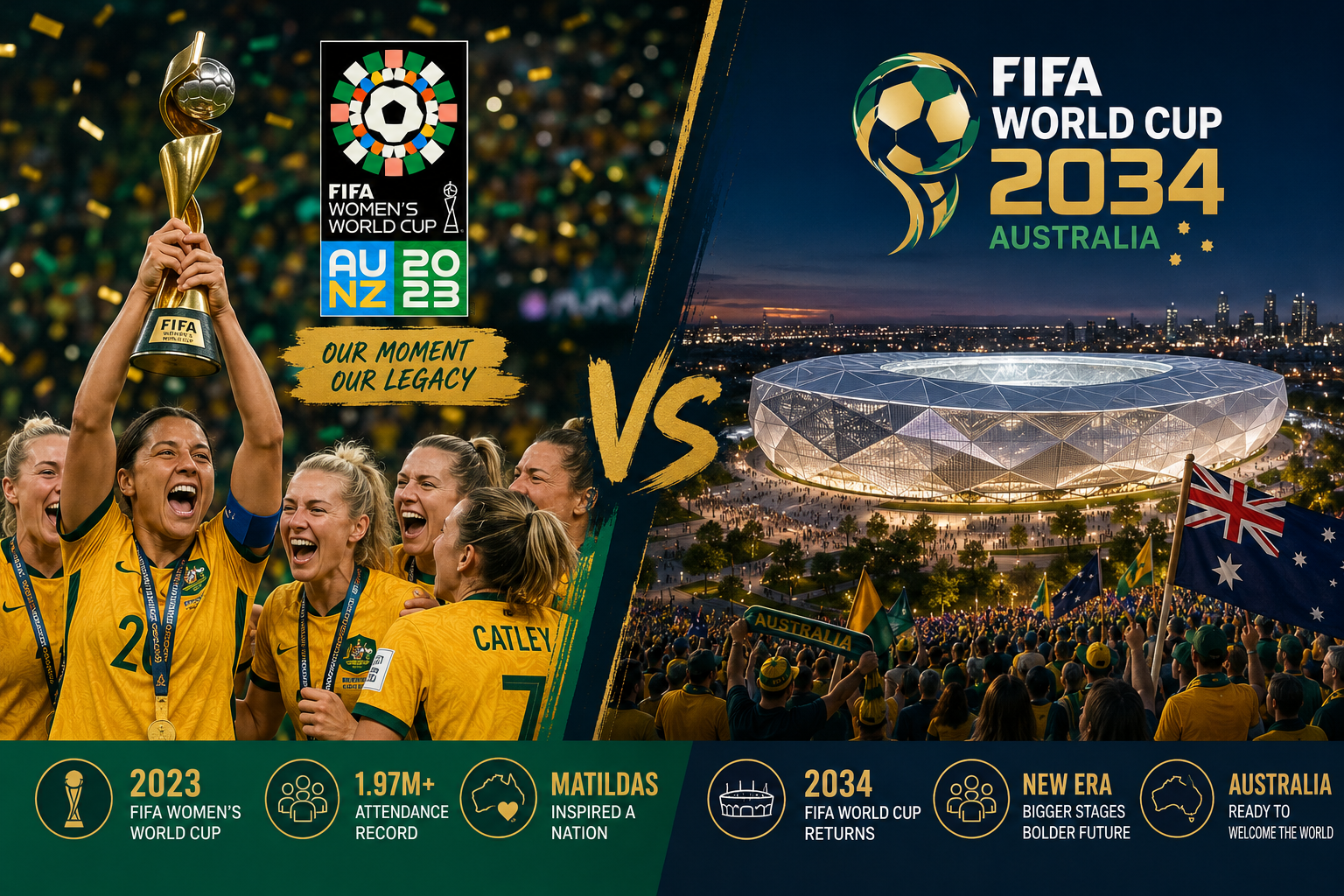
The FIFA Women’s World Cup 2023 and the upcoming 2034 Men’s World Cup are very different events in scale, but both carry enormous significance for Australian football.
| Feature | Women’s World Cup 2023 | Men’s World Cup 2034 |
|---|---|---|
| Co-host | New Zealand | Saudi Arabia |
| Teams | 32 | 48 (expanded format) |
| Australian team | Matildas (semi-finalists) | Socceroos (TBC) |
| Avg. attendance | ~30,000+ per match | Expected 50,000–80,000+ |
| Ticket price range | AUD $50–$350 | Estimated AUD $80–$600+ |
| Global TV audience | 2 billion+ (FIFA estimate) | Expected to exceed prior records |
The Women’s World Cup 2023 was a genuine cultural moment in Australia. The Matildas’ run to the semi-finals sparked record TV ratings and sold-out stadiums. The men’s tournament in 2034 will be larger in scale, but the 2023 event proved Australia can deliver world-class football hosting.
Common mistake: Assuming the Women’s World Cup is a “smaller” event. In Australia, the 2023 tournament generated massive economic and cultural impact, and the Matildas drew bigger crowds than many men’s club matches.
How Much Do World Cup Tickets Cost in Australia?
Ticket prices for World Cup Australia events vary based on the match stage, seating category, and demand. For the 2023 Women’s World Cup, tickets ranged from approximately AUD $50 for group stage matches to over AUD $350 for knockout rounds. Final and semi-final tickets were significantly harder to get and often resold at much higher prices.
For the 2034 Men’s World Cup, official pricing hasn’t been confirmed yet, but based on FIFA’s pricing structure from recent tournaments:
- Category 4 (local/community pricing): Estimated AUD $80–$150
- Category 1–3 (general public): Estimated AUD $150–$600+
- Hospitality packages: Can run into thousands of AUD
Key tip: Always buy through the official FIFA ticketing portal. Third-party resellers often charge 3–5x face value, and counterfeit tickets are a real risk at major tournaments.
Can International Fans Easily Get World Cup Tickets?
Yes, international fans can purchase World Cup Australia tickets through FIFA’s official ticketing platform, but competition is fierce. FIFA typically runs several sales phases: early access ballots, general sales, and last-minute releases.
Steps for international fans:
- Create an account on the official FIFA ticketing website well before sales open.
- Register for the ticket ballot during the early access phase.
- Apply for an Australian Electronic Travel Authority (eTA) or visa early — don’t wait until you have tickets confirmed.
- Book accommodation as soon as your city preference is known. Hotels near stadiums sell out months in advance.
- Check FIFA’s official resale platform if the initial ballot is unsuccessful.
Edge case: Some ticket categories are reserved for fans of specific competing nations. If the Socceroos qualify for 2034, Australian fans get priority access to those allocation pools.
What Venues Will Host World Cup Matches in Australia?
For the 2034 Men’s World Cup, Australia’s confirmed and proposed host venues include major stadiums across the country. While final FIFA confirmation is still pending for some sites, the expected venues include:
- Stadium Australia (Sydney) — capacity ~83,500, the likely venue for marquee matches
- Melbourne Cricket Ground (MCG) — capacity ~100,000, one of the world’s largest stadiums
- Suncorp Stadium (Brisbane) — capacity ~52,500
- Adelaide Oval — capacity ~53,500
- Perth Stadium (Optus Stadium) — capacity ~60,000
For the 2023 Women’s World Cup, matches were held across Sydney, Melbourne, Brisbane, Adelaide, Perth, and Auckland (New Zealand).
How Do Australian Teams Typically Perform in World Cups?
Australia’s World Cup record is a mixed but improving story. The Socceroos reached the quarter-finals of the 2006 FIFA Men’s World Cup in Germany — still their best-ever result. They’ve qualified for five men’s World Cups total.
The Matildas have been the stronger side in recent years. Their semi-final run at the 2023 Women’s World Cup on home soil was the highlight of Australian football history, with Sam Kerr’s iconic goal against England becoming one of the tournament’s defining moments.
Summary of Australian World Cup performance:
- Socceroos best result: Quarter-finals, 2006
- Matildas best result: Semi-finals, 2023
- Matildas FIFA ranking: Consistently top 15 globally
- Socceroos FIFA ranking: Typically 30–50 range
Which Countries Are Most Likely to Compete in Australia’s World Cup?
The 2034 Men’s World Cup will feature 48 teams, expanded from the previous 32-team format. This means more nations qualify, including more slots for the AFC (Asian Football Confederation), which Australia belongs to.
Expected strong contenders for 2034 include traditional powerhouses: Brazil, Argentina, France, Germany, Spain, England, and rising forces like Japan, South Korea, Morocco, and USA (fresh off hosting the 2026 tournament). Saudi Arabia, as co-host, qualifies automatically.
Australia (Socceroos) will need to qualify through the AFC pathway, which is competitive but achievable given the expanded field.
What Are Common Mistakes Tourists Make at World Cup Events?
Attending a World Cup is an incredible experience, but first-timers often get caught out by the same issues:
- Booking accommodation too late. Host city hotels fill up 12–18 months before the tournament for popular match days.
- Underestimating transport. Stadium precincts get extremely congested. Use official shuttle services and public transport, not rideshare apps near match time.
- Buying tickets from unofficial sources. Counterfeit tickets are common. Stick to FIFA’s official platform.
- Not checking the local weather. Australian summers (December–February) can be extremely hot. Hydration and sun protection matter at outdoor stadiums.
- Missing fan zones. Even without a match ticket, official fan zones offer live screenings, food, and atmosphere. They’re often free or low-cost.
Is the World Cup Good for People Who Aren’t Big Sports Fans?
Absolutely yes. World Cup Australia events are as much a cultural festival as a sporting competition. Fan zones, food markets, live music, and international street festivals run throughout tournament periods in host cities.
For non-fans, the best experiences include:
- Fan zones and live sites (usually free entry)
- Cultural events tied to visiting nations
- City atmosphere — host cities genuinely transform during World Cups
- Food and hospitality — international fan villages bring global cuisines together
Choose attending if: You enjoy travel, cultural events, or live entertainment — you don’t need to love football to have a great time during a World Cup.
How Expensive Is It to Travel to World Cup Cities in Australia?
Travel costs during World Cup Australia periods spike significantly compared to normal tourism seasons. Rough estimates for a week-long trip during the tournament:
- Flights (international): AUD $1,500–$5,000+ return depending on origin
- Accommodation (per night): AUD $200–$600+ in host cities during match weeks
- Match tickets: AUD $80–$600+ per ticket
- Food and transport: AUD $80–$150 per day
Budget tip: Book accommodation in nearby suburbs or smaller cities and use rail or coach connections to the host stadium. It’s significantly cheaper and often just as convenient.
COVID Restrictions and Accessibility at World Cup Australia Events
No COVID-related attendance restrictions are currently in place for sporting events in Australia as of 2026. Fans can attend matches without vaccination requirements or testing mandates under current public health settings. This can change, so always check the latest Australian government health advice closer to the event.
For fans with disabilities, Australian stadiums have made significant improvements:
- Dedicated wheelchair spaces and companion seating at all major venues
- Accessible entrances and facilities at Stadium Australia, MCG, and Optus Stadium
- FIFA’s ticketing platform includes accessibility ticket categories
- Audio description services and sensory-friendly viewing areas are available at select venues
Edge case: If you require specific accessibility accommodations, contact FIFA’s ticketing support directly when purchasing — don’t assume standard seating will meet your needs.
FAQ: World Cup Australia
Q: Has Australia ever hosted a FIFA Men’s World Cup? No. Australia is confirmed to co-host the 2034 FIFA Men’s World Cup alongside Saudi Arabia. It will be the first time Australia hosts the men’s tournament.
Q: When did Australia host the Women’s World Cup? Australia co-hosted the FIFA Women’s World Cup 2023 with New Zealand. The Matildas reached the semi-finals before losing to England.
Q: How do I buy World Cup 2034 tickets in Australia? Tickets will be sold through FIFA’s official ticketing platform. Sales phases typically include ballots and general sales. No official sale dates have been announced yet for 2034.
Q: Do I need a visa to attend the World Cup in Australia? Most international visitors need either a visa or an Electronic Travel Authority (eTA) to enter Australia. Apply well in advance of the tournament.
Q: Which Australian city is best for World Cup matches? Sydney and Melbourne are the largest host cities with the biggest stadiums. Brisbane is a strong option for atmosphere and weather. Choose based on which matches are scheduled there.
Q: Will the Socceroos automatically qualify for the 2034 World Cup? No. Australia must qualify through the AFC pathway. Only Saudi Arabia (as co-host) has automatic qualification. Australia’s qualification campaign will run in the years leading up to 2034.
Q: Are children’s tickets cheaper for World Cup Australia events? Yes. FIFA typically offers reduced pricing for children under 16 in certain ticket categories. Check the official FIFA ticketing site for exact age brackets and pricing when sales open.
Q: Can I watch World Cup matches for free in Australia? Fan zones and live sites in host cities often screen matches for free or at low cost. Broadcast rights determine which TV channels air matches — check local broadcaster announcements closer to the tournament.
Conclusion: How to Make the Most of World Cup Australia
World Cup Australia is one of the biggest sporting opportunities the country has seen or will see. Whether you’re reflecting on the magic of the 2023 Women’s World Cup or planning for the 2034 Men’s tournament, the key is to act early and plan smart.
Actionable next steps for fans:
- Register on FIFA’s official website now so you’re ready when ticket sales open for 2034.
- Start a travel fund — World Cup trips are expensive, but entirely worth it with proper planning.
- Follow the Socceroos’ and Matildas’ qualification campaigns to stay connected to Australia’s football journey.
- Check host city announcements from Football Australia and FIFA for venue and schedule updates.
- Book accommodation early — ideally 12–18 months before the tournament begins.
The World Cup in Australia isn’t just a football tournament. It’s a once-in-a-generation event that brings the whole country together. Don’t miss it. ⚽🇦🇺