Last updated: May 26, 2026
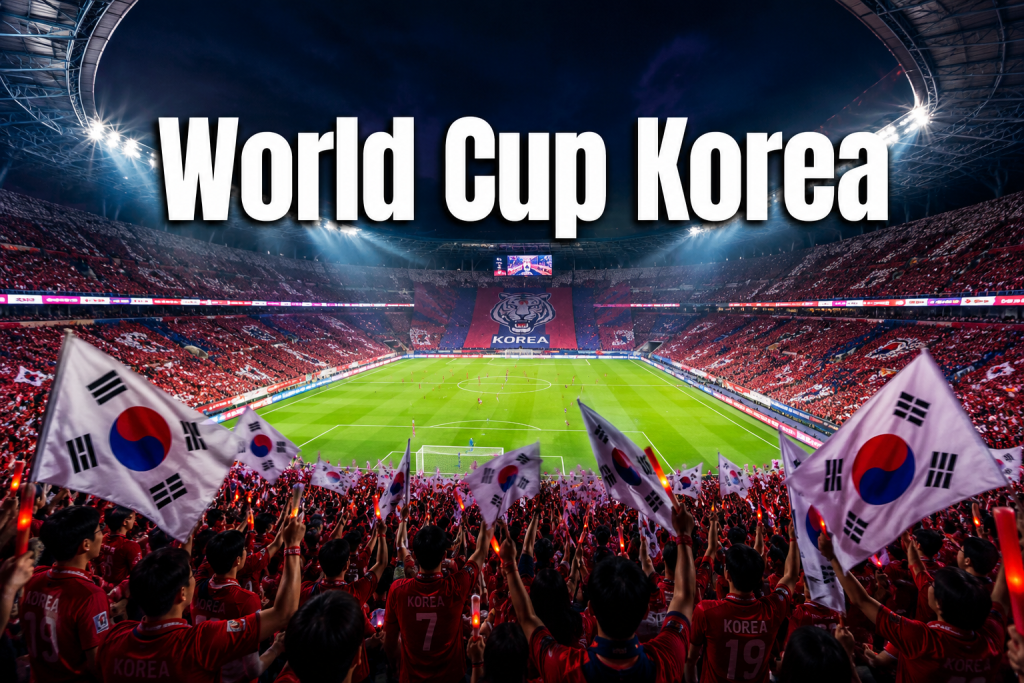
Quick Answer: South Korea made its FIFA World Cup debut in 1954 and has qualified for every tournament since 1986, making it one of Asia’s most consistent World Cup nations. The team’s greatest achievement came in 2002, when South Korea co-hosted the tournament with Japan and finished fourth — the best result ever by an Asian team. As of 2026, South Korea remains a competitive force in international football.
Key Takeaways
- South Korea first appeared at the World Cup in 1954 and has qualified for 11 consecutive tournaments from 1986 onward.
- The 2002 FIFA World Cup Korea/Japan produced one of football’s biggest upsets, with South Korea reaching the semi-finals.
- South Korea’s national team, known as the Taeguk Warriors, consistently ranks among Asia’s top two or three sides.
- Son Heung-min remains the most recognizable Korean player globally and a likely squad leader heading into future tournaments.
- Korean players undergo one of Asia’s most demanding training regimens, combining European club-level conditioning with K League development.
- South Korea and Japan are Asia’s two most successful World Cup nations, though their head-to-head records and styles differ meaningfully.
- Fan criticism of the national team often centers on tactical rigidity and inconsistent performances against top-tier European sides.
- Attending a World Cup match involving Korea typically costs between $150 and $600 USD per ticket, depending on the round and seat category.
When Did Korea First Play in the World Cup?
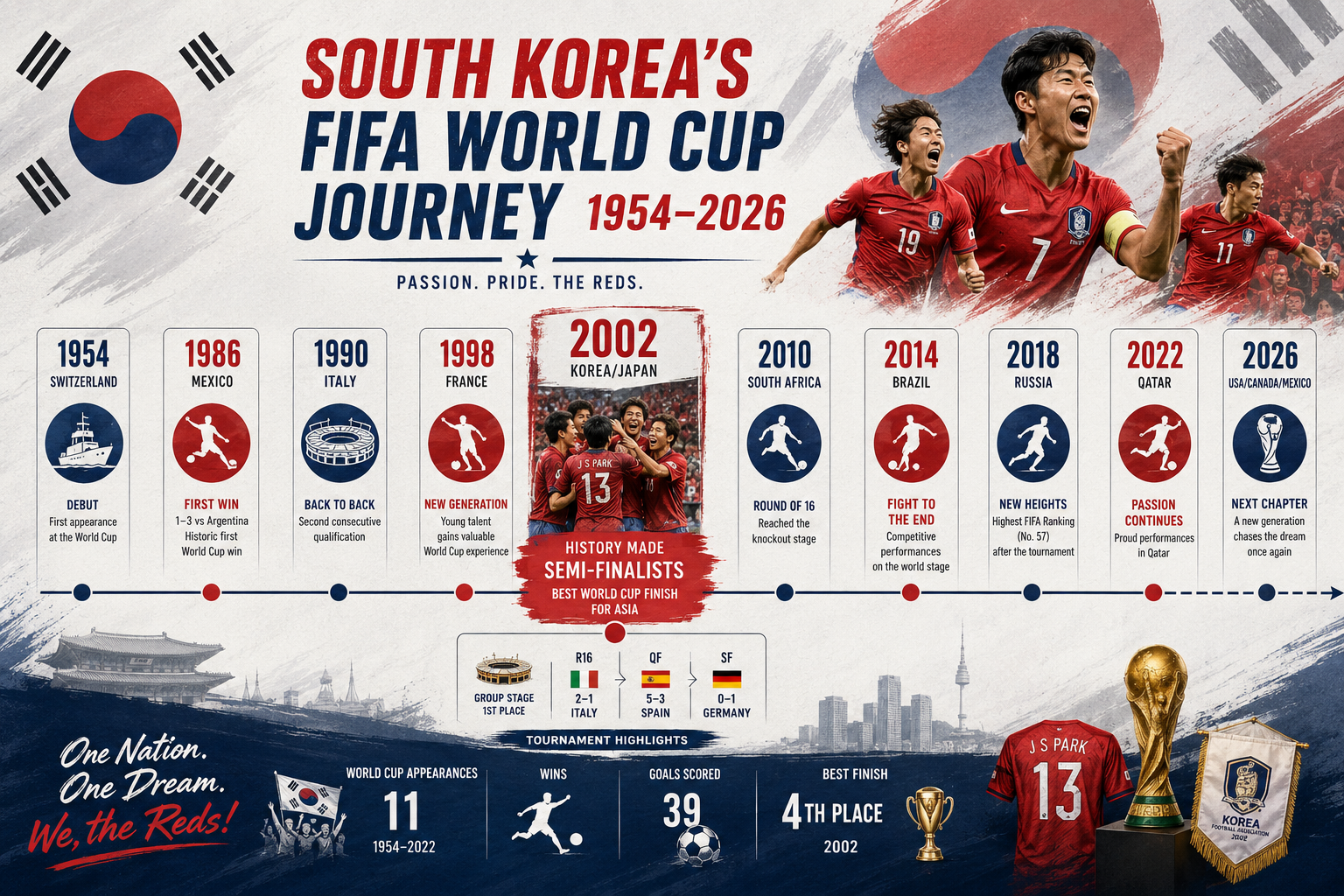
South Korea made its FIFA World Cup debut at the 1954 tournament in Switzerland — the first Asian nation to qualify for a post-war World Cup. The debut was difficult: Korea lost 9-0 to Hungary and 7-0 to Turkey, finishing bottom of their group. Despite those results, the qualification itself was a landmark moment for Asian football.
After 1954, South Korea did not return to the World Cup until 1986 in Mexico, where the modern era of Korean football truly began. Since then, the team has qualified for every single World Cup — a streak of 11 consecutive tournaments that runs through 2026.
Key fact: South Korea’s 1954 World Cup squad traveled to Switzerland with minimal preparation and limited resources. The fact that they qualified at all was considered a national achievement.
How Many Times Has South Korea Made It to the World Cup?
South Korea has qualified for the FIFA World Cup 11 times as of 2026 (1954, then 1986 through 2026 consecutively). This makes South Korea the most qualified Asian nation in World Cup history alongside Japan, which also has multiple consecutive appearances.
The consistency since 1986 is particularly notable. Very few Asian nations have maintained that level of qualification across four decades, and it reflects the depth of football infrastructure in South Korea, including the K League (founded in 1983) and a strong youth development pipeline.
What Is Korea’s Best Performance in World Cup History?
South Korea’s best World Cup performance remains the 2002 FIFA World Cup, co-hosted by South Korea and Japan. Under coach Guus Hiddink, the Taeguk Warriors defeated Poland, Portugal, Spain, and Italy on their way to the semi-finals — finishing fourth overall.
That run is still the best result any Asian or African team has ever achieved at a FIFA World Cup. Key moments included:
- A 1-0 group stage win over Poland
- A stunning 1-0 defeat of Portugal to advance from the group
- A penalty shootout victory over Spain in the quarter-finals
- A semi-final loss to Germany (1-0), followed by a third-place playoff loss to Turkey (3-2)
The 2002 tournament transformed football culture in South Korea. An estimated 4 million people watched matches in public viewing areas in Seoul alone (FIFA, 2002).
How Does Korea’s World Cup Team Compare to Japan’s National Team?
South Korea and Japan are Asia’s two most successful World Cup nations, but they differ in style, squad depth, and recent trajectory.
| Category | South Korea | Japan |
|---|---|---|
| World Cup appearances | 11 | 9 |
| Best result | 4th place (2002) | Round of 16 (multiple) |
| FIFA ranking (approx. 2026) | Top 25–30 in Asia | Top 20–25 globally |
| Playing style | Physical, high-press | Technical, possession-based |
| Top current player | Son Heung-min | Takefusa Kubo |
| Domestic league | K League | J1 League |
South Korea tends to rely more on physicality and pressing intensity, while Japan has developed a reputation for technical passing football. Both nations export players to top European leagues, though Japan has arguably seen more of its players break into starting roles at elite clubs in recent years.
Choose South Korea if you want to watch a team that competes hard in knockout rounds. Choose Japan if you prefer watching possession-based, technically refined football.
What Does It Cost to Attend a World Cup Match Involving Korea?
Attending a World Cup match where South Korea plays typically costs between $150 and $600 USD per ticket for face-value FIFA tickets, depending on the round and seating category. Group stage tickets sit at the lower end; knockout rounds climb significantly.
Additional costs to budget for:
- Flights and accommodation in the host country (varies widely)
- Travel within the host city to the stadium
- Food and merchandise inside the venue (typically $20–$50 per person per match)
- Resale market premiums — if Korea advances deep into a tournament, secondary market prices can triple face value
FIFA’s official ticketing portal is the only guaranteed legitimate source. Third-party resellers carry risk of fraud, especially for high-demand Korean matches.
Which Korean Players Are Most Likely to Join the National World Cup Squad?
Son Heung-min (Tottenham Hotspur) is the undisputed first name on the teamsheet and the squad’s captain. Beyond Son, the players most likely to feature in Korea’s 2026 and future squads include:
- Hwang Hee-chan — RB Leipzig forward, strong pressing and finishing
- Lee Kang-in — Paris Saint-Germain midfielder, creative and technically gifted
- Kim Min-jae — Bayern Munich center-back, one of the best defenders in Europe
- Cho Gue-sung — prolific K League striker with international experience
- Hwang In-beom — Vancouver Whitecaps midfielder, experienced at international level
The Korean Football Association (KFA) selects squads based on club form, fitness, and tactical fit. Players in Europe’s top five leagues generally receive priority consideration.
What Kind of Training Do Korean World Cup Players Go Through?
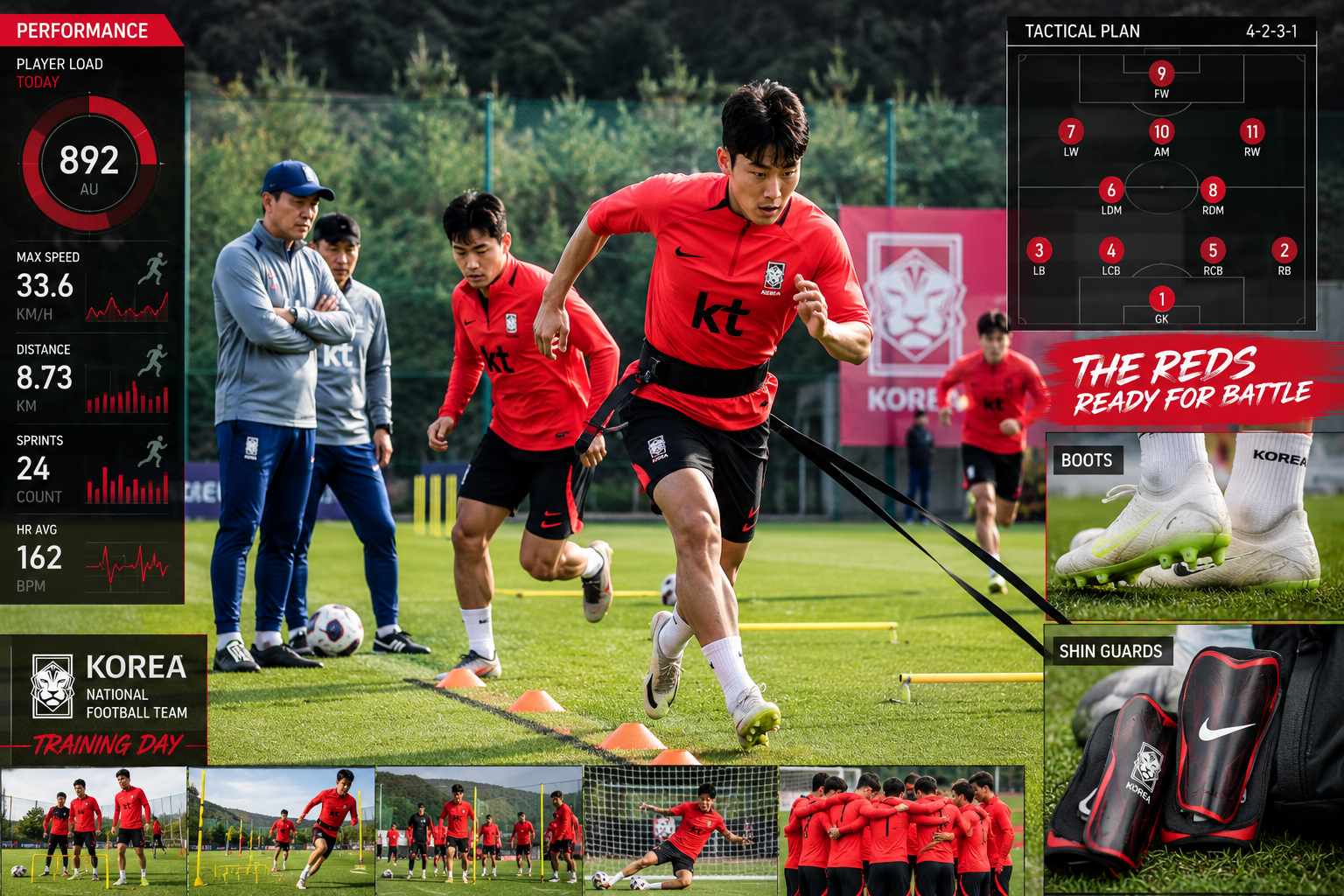
Korean World Cup players follow one of Asia’s most demanding preparation schedules. South Korea’s national team training camps typically involve:
- Tactical sessions focused on pressing triggers, defensive shape, and set pieces
- High-intensity interval training (HIIT) to build the fitness levels needed for a tournament schedule
- Video analysis of opponents, with individual and group sessions
- Technical drills including passing patterns, finishing, and crossing
- Recovery protocols — ice baths, physiotherapy, and sleep monitoring are standard at the senior level
Players based at European clubs arrive with high base fitness levels. The KFA’s coaching staff then integrates them into a collective system, which can be challenging given the short preparation windows before tournaments.
What Are Common Mistakes Korean Players Make in International Tournaments?
South Korea’s recurring weaknesses in World Cup play tend to fall into a few patterns:
- Overreliance on Son Heung-min: When Son is marked out of the game, Korea can struggle to create chances through other routes.
- Defensive vulnerability against fast wingers: Korea’s high defensive line has been exposed by pace in several tournaments.
- Slow starts in group stages: Korea has historically needed to recover from early deficits or draws before finding form.
- Transition from defense to attack: Losing the ball in midfield during transitions has cost Korea goals in multiple World Cup campaigns.
These are patterns noted by analysts and coaches, not personal failures — they reflect systemic tactical choices that opponents have learned to exploit.
Why Do Some Korean Fans Criticize the National Soccer Team?
Fan criticism of the Korean national team is real and vocal, particularly on domestic sports media and fan forums. The main complaints include:
- Tactical conservatism — critics argue the team plays too defensively against top opponents instead of pressing the game
- Squad selection controversies — certain players are seen as selected based on reputation rather than current form
- Early tournament exits — despite consistent qualification, Korea has only advanced past the group stage four times (1954, 2002, 2010, 2022)
- Coaching instability — the KFA has changed head coaches frequently, disrupting tactical continuity
This criticism reflects high expectations from a passionate fanbase, not a lack of quality in the squad. Korean football culture takes national team performance seriously, and accountability is part of that culture.
How Do Injuries Impact Korea’s World Cup Performance?
Injuries to key players, particularly Son Heung-min, have had a measurable impact on Korea’s World Cup campaigns. At the 2022 Qatar World Cup, Son played with a fractured orbital bone suffered weeks before the tournament, wearing a protective mask throughout. Despite the injury, he scored in the group stage as Korea advanced to the Round of 16.
Korea’s squad depth means that losing a second or third-tier player is manageable. But losing Son or Kim Min-jae significantly reduces the team’s ceiling. The KFA now works closely with European clubs on load management and injury prevention protocols during international windows.
Is the Korean National Team Good for Amateur Players to Watch and Learn From?
Yes — South Korea’s national team offers several tactical lessons that amateur players can apply directly:
- Pressing as a unit: Korea’s off-ball pressing is organized and disciplined, making it a good model for team-level defensive shape.
- Work rate without the ball: Korean players are known for their running stats and effort, which is teachable at any level.
- Set piece organization: Korea’s defensive set piece structure is well-drilled and worth studying.
For amateur players, watching how Korea’s midfielders track back and how the defensive line holds shape during transitions is more instructive than watching purely technical sides. The effort-based elements of Korea’s game are accessible and imitable.
FAQ
Q: Has South Korea ever won the FIFA World Cup? No. South Korea’s best result is fourth place at the 2002 FIFA World Cup, co-hosted by South Korea and Japan.
Q: How many times has South Korea qualified for the World Cup? South Korea has qualified 11 times: 1954, and then consecutively from 1986 through 2026.
Q: Who is South Korea’s all-time top scorer at the World Cup? Ahn Jung-hwan and several others share goals from the 2002 run, but Son Heung-min is South Korea’s most prolific active international scorer overall.
Q: What is the Korean national football team’s nickname? The team is officially nicknamed the Taeguk Warriors, referencing the Taeguk symbol on the South Korean flag.
Q: How does South Korea qualify for the World Cup? South Korea qualifies through the AFC (Asian Football Confederation) qualification process, competing against other Asian nations across multiple rounds.
Q: What league do most Korean World Cup players play in? Most senior squad members play in European top-flight leagues (Premier League, Bundesliga, Ligue 1) or the K League in South Korea.
Q: Who coaches the South Korean national team in 2026? The KFA appoints and changes coaches periodically. Check the KFA’s official website for the current head coach as of 2026.
Q: What equipment do Korean World Cup players typically use? Korean players wear Nike kits (South Korea’s kit supplier) and use boots from Nike, Adidas, and Puma depending on individual sponsorship deals.
Q: How does South Korea perform against European teams at the World Cup? South Korea has beaten Portugal, Spain, and Italy in World Cup history, but results against top European sides are inconsistent. Upsets are possible but not frequent.
Q: What is the K League and how does it feed the national team? The K League is South Korea’s top professional football division, founded in 1983. It serves as the primary development ground for players who haven’t secured European contracts.
Conclusion
South Korea’s World Cup story is one of consistent qualification, one extraordinary peak in 2002, and an ongoing effort to close the gap with the world’s elite. The Taeguk Warriors bring genuine quality — particularly through players like Son Heung-min and Kim Min-jae — combined with a work ethic and tactical discipline that makes them competitive in any group stage.
Actionable next steps for football fans:
- Watch K League matches to track emerging players before they reach the national squad.
- Follow Son Heung-min and Lee Kang-in at their European clubs to understand Korea’s attacking options heading into the next cycle.
- Study the 2002 World Cup Korea/Japan campaign — it remains one of the most tactically instructive tournament runs in modern football history.
- Check the KFA official website (kfa.or.kr) for squad announcements, match schedules, and ticket information.
- Engage with Korean football communities on platforms like Reddit’s r/soccer or dedicated K League forums for real-time analysis and fan perspectives.
South Korea’s football journey is far from finished. With a deep European-based squad and a passionate fanbase, the next chapter of World Cup Korea could be the most compelling yet.
References
- FIFA. (2002). 2002 FIFA World Cup Korea/Japan Official Report. FIFA. https://www.fifa.com
- Korean Football Association. (2024). KFA Official History and Statistics. https://www.kfa.or.kr
- UEFA. (2023). Son Heung-min player profile and statistics. https://www.uefa.com
- Transfermarkt. (2024). South Korea national football team squad values. https://www.transfermarkt.com